Monday, May 2, 2011

San Juanico to Puerto Escondido


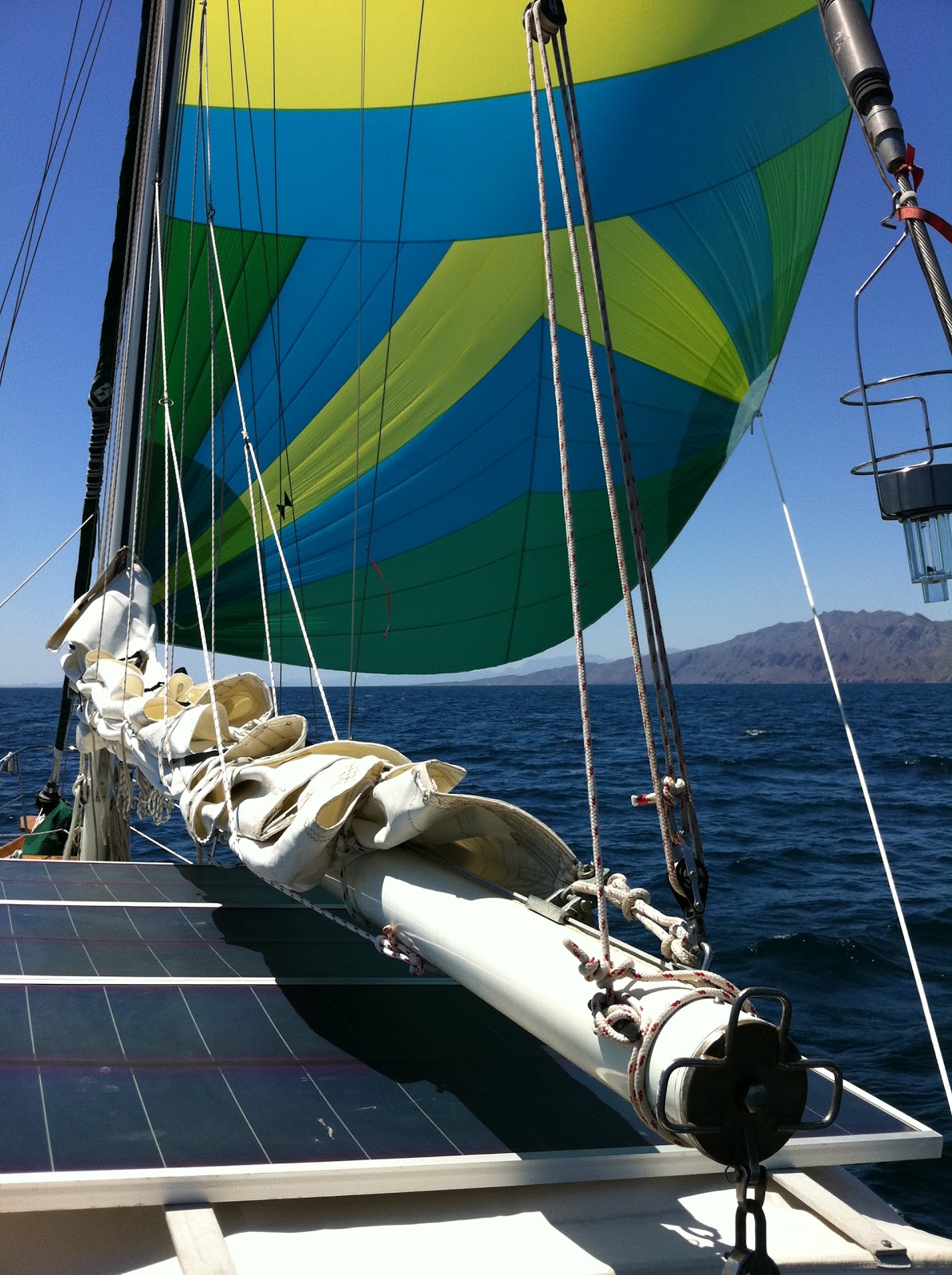
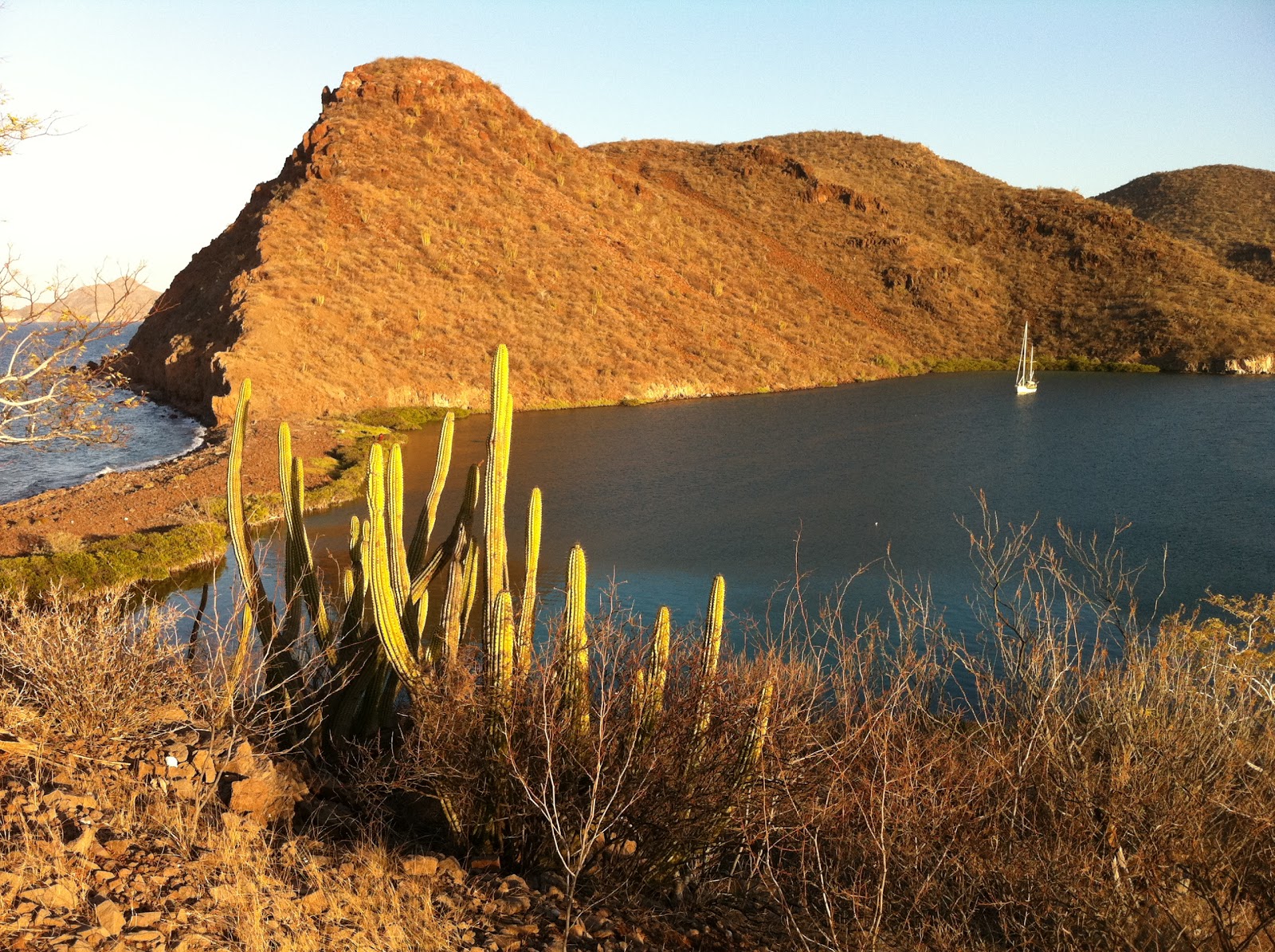
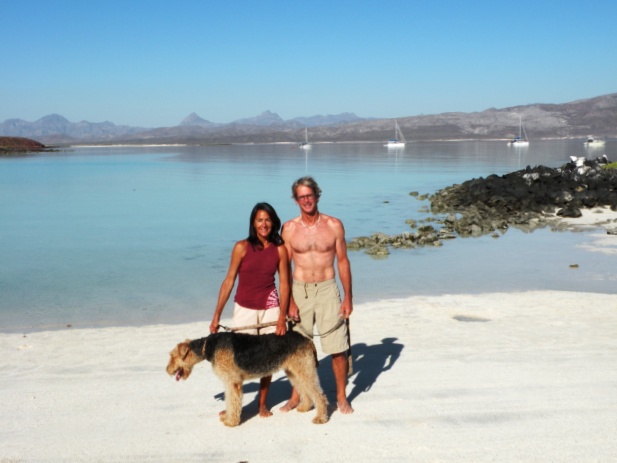
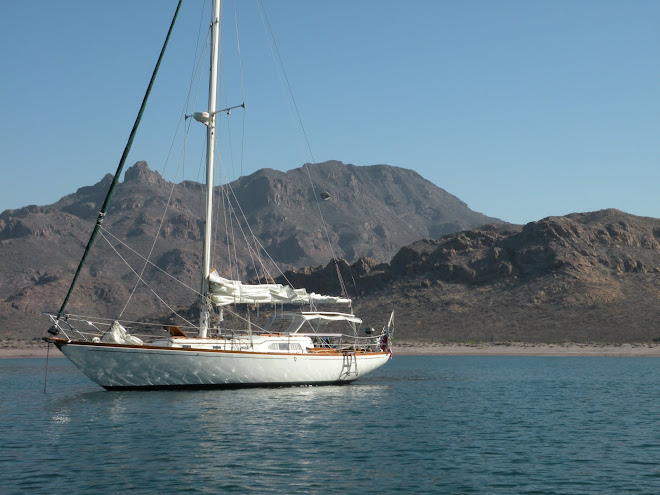
We left San Juanico after two nights and had a most incredible 18 mile spinnaker run to Isla Coronados. Seas were nearly flat and the wind stayed around 12 knots. We popped the chute as we left the bay and rode it for almost four hours at around five knots. I don’t know if sailing gets any better. The mountainous Baja coast provided great scenery. We shared this with Colorado Springs sailors Barry and Sue on Waveglider, a 34 foot cat that left just minutes before us. We talked on VHF and complimented each others spinnakers. Waveglider soon peeled off and headed to Puerto Ballandra on Isla Carmen. We continued down the coast to one of our favorite anchorages at Isla Coronados. Simply stated it’s got crystal clear turquoise water, white sand beaches, black volcanic rock, and bright green ice plant like vegetation along the shore. On our way back North we hope to climb the volcano to take in the summit view.


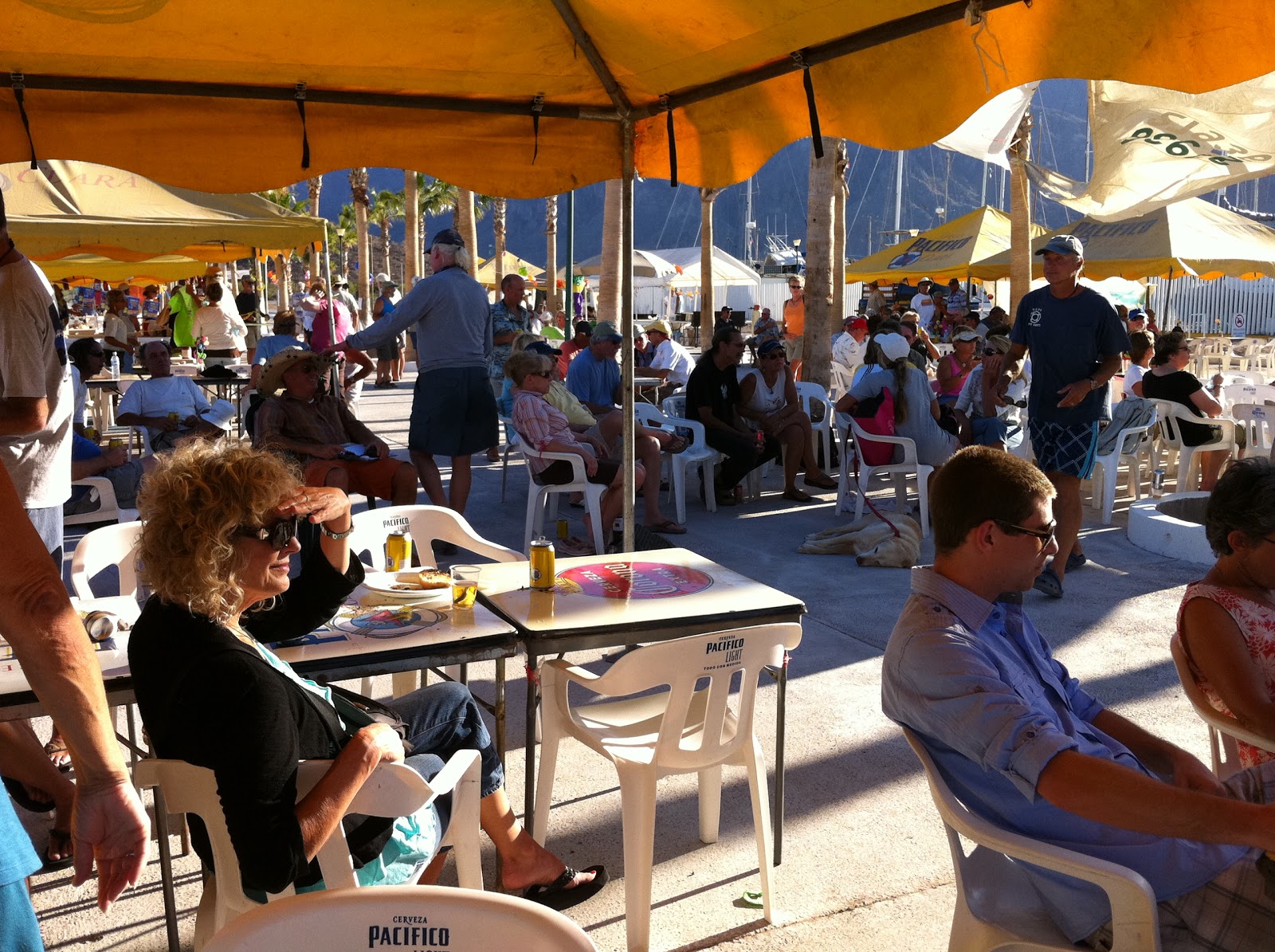
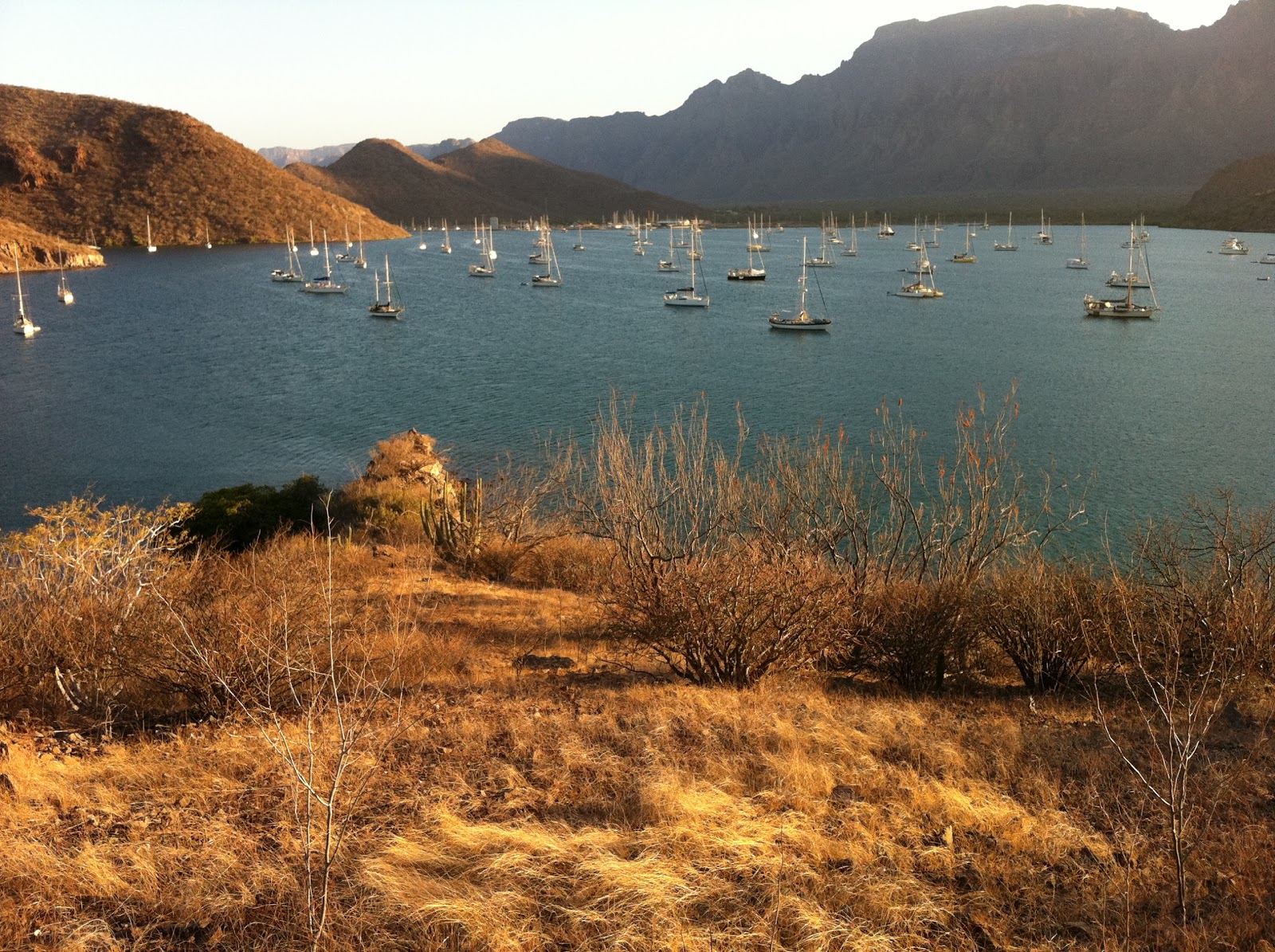
From Isla Coronados it’s a 20 mile run down to Puerto Escondido. The forecast was for NE winds so we had our hopes up for another day under spinnaker. Well, we got SE but still had another great sail close hauled on flat seas with the genoa, staysail, and main all drawing nicely. This run took us down the channel between Isla Carmen and the Baja coast. It’s similar in scale to the Sir Francis Drake Channel in the BVI. We joined around 150 other cruising boats for Loretofest in the large protected bay at Puerto Escondido. This well organized event has been a really good time with great food, live music, seminars, and lots of activities.


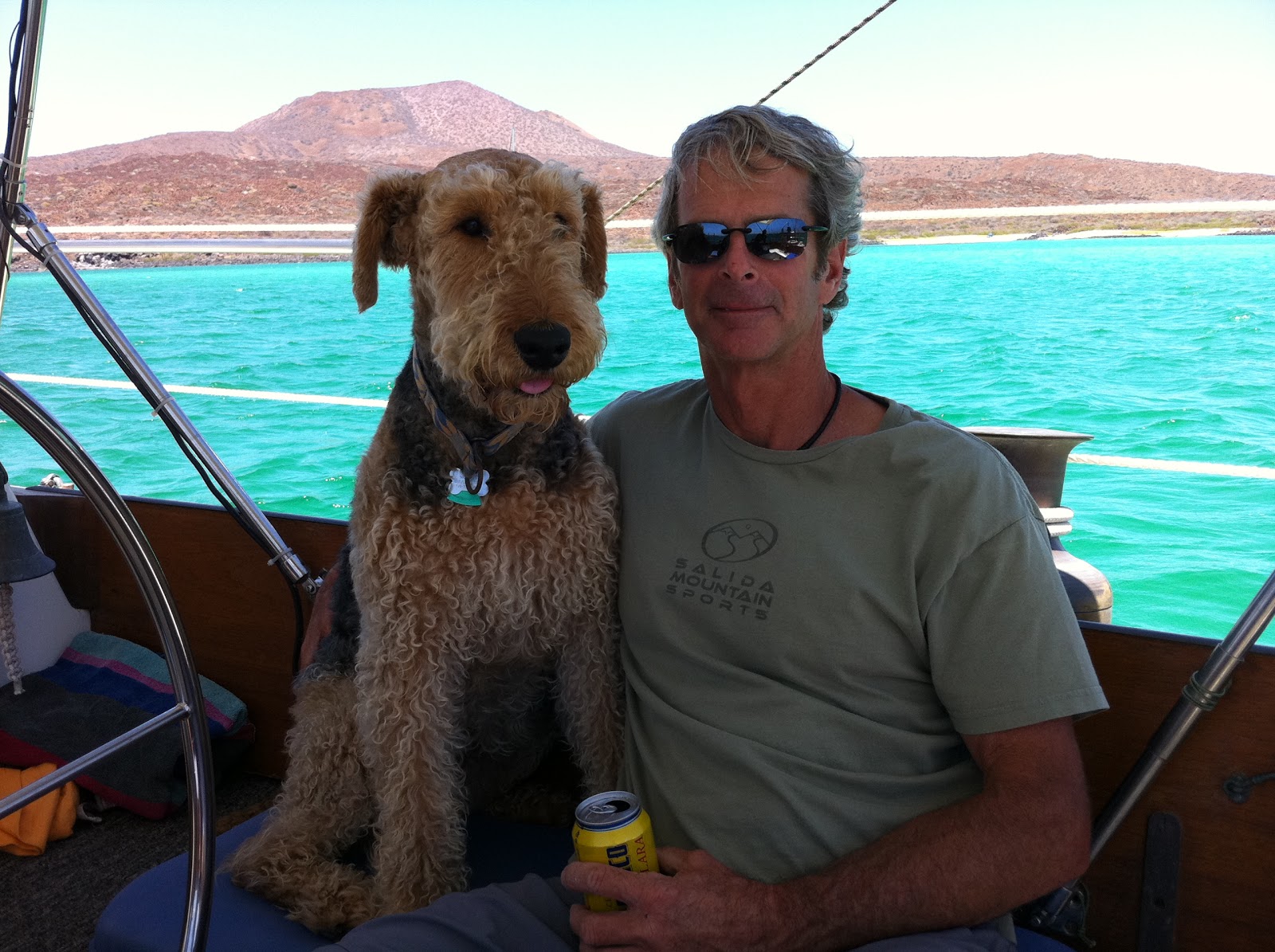
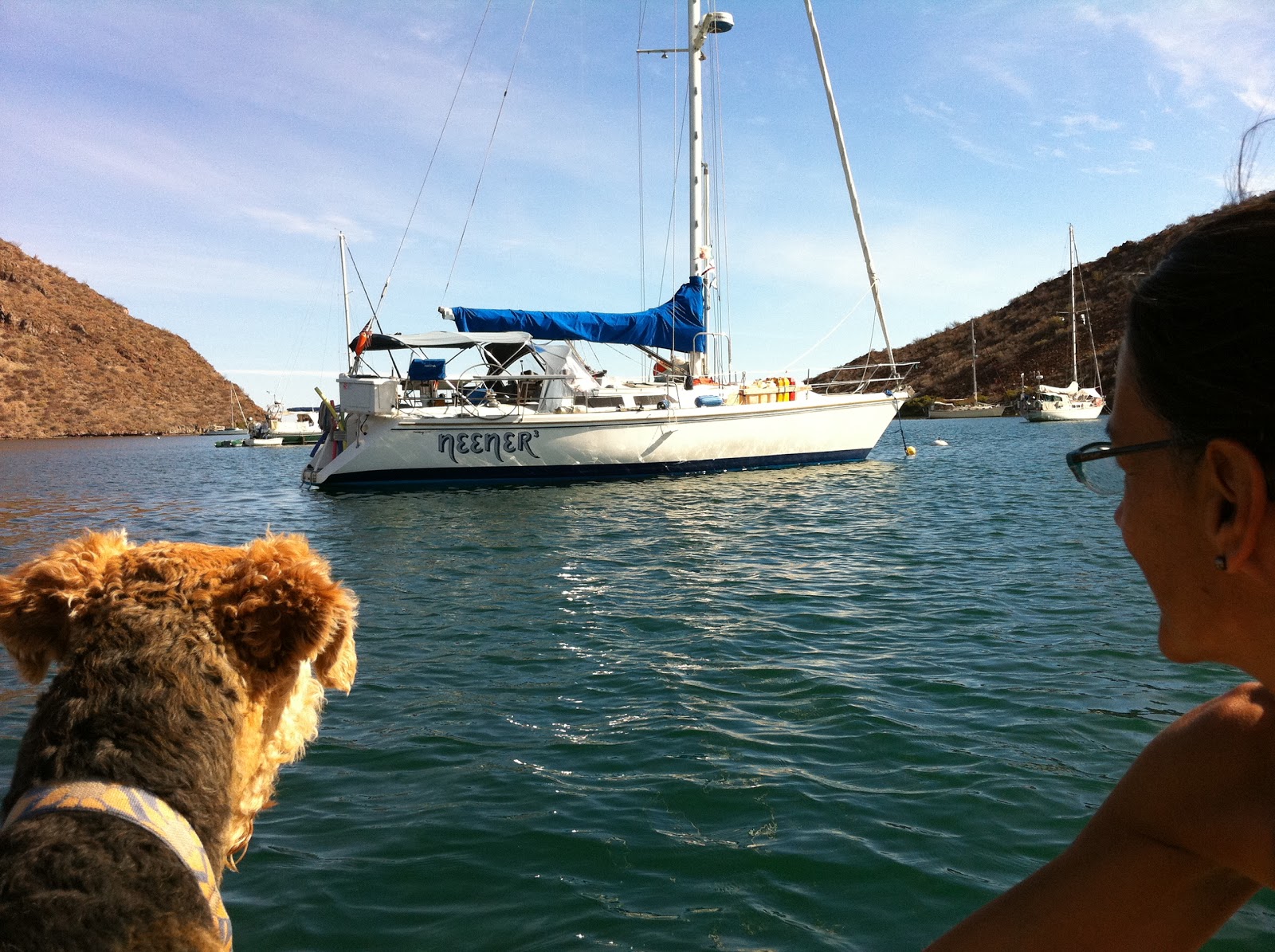
I just have to say a little about boat names. Between SSB and VHF radios we hear a lot of them. Some good, some bad, and some like one we saw today really crack us up. First though, I have to explain a little about radio protocol. When hailing another boat you repeat it’s name three times then state your boat’s name. Today, while taking Morgan to shore for a walk, we passed a nice Catalina 42 out of Santa Cruz named Neener. This afternoon I think Neener was the most often hailed boat in the bay. Seemed like everyone wanted to get on the radio to say "neener neener neener".


The forecast is for some serious wind out of the North for a couple of days. We’re hearing close to 40 knots out in the middle of the sea. We’ll wait that out safely moored here in Puerto Escondido. We may choose to participate in a race/rally later this week that’s going down to La Paz. So far it looks like a dozen or so boats are participating. We’ll see. Lately we have been in cruise mode. There will be plenty of racing when we get back to Colorado.


Saturday, April 30, 2011

San Carlos to San Juanico


What a mellow crossing! We sailed out of San Carlos at 1530 with about 10 kts on the beam. As the sun set and the Sonoran coast faded away behind us, the wind faded too. This evening we were lucky and saw the "green flash" at sunset. This burst of light can sometimes be seen as the very last of the sun’s disk dips below the horizon. It’s the result of the atmosphere bending the light and causing a color change from red-orange to blue-green. It’s only seen when the sun sets over the sea.

With autopilot and chartplotter powered up Solera took care of herself. We motorsailed through the night on flat calm seas. Once again, the luminescence put on a show. This time it was different though as large schools of fish created great undulating clouds of glowing water around Solera. As we motored along in the moonless night these schools would brighten then dim depending on the activity of the fish. The scene was very dynamic and captivating. A golden moon rose at around 2300 and gave the sea surface a dramatic look. It faded to yellow then to the more usual light blue as it rose. I stayed up till around 0100 then Cyn took her turn at watch. After a good 3 hours of sleep I was back in the cockpit. So far, I’ve never had a problem staying awake. The 72 mile passage took us just under 15 hours.


With the calm conditions we decided to take a more southern track and head to Punta Chivato instead of Isla San Marcos. This is a beautiful and comfortable anchorage but only in calm or light northerly winds. Ashore, there is an incredible shell beach, a few gringo houses and a small restaurant / hotel complex. Our cruisers guide suggested having a margarita on the stone patio of the restaurant that overlooks the anchorage. We took that advise and thank the author for the suggestion.


Next, it was off to Bahia Concepcion . The sailing was great on this 18 mile passage. We arrived at the Santispac anchorage on the Saturday before Easter. One problem though. This is a huge holiday weekend in Mexico and this spot has easy access. So, it was party central with atvs, dirt bikes, jet skis, ski boats, kayaks and families camping all along the half mile beach. We moved less than a mile to a more inaccessible anchorage and found peace.

Cyn just reminded me to write about my dinghy incident while preparing to leave Concepcion. First off, I think there is a place in hell reserved for the guy who designed this little deflatable boat. Everything glued is coming unglued, the floorboards are too big and make you crazy trying to fit them, and the two patches it has are starting to leak. It’s leaks are leaking! Anyway, I was lifting the dinghy onto the deck with the spinnaker halyard when "pop" the lifting handle on the bow broke. The boat lands in the water, begins drifting away, and I get to go for a cool early morning swim to go retrieve it. Time for a new dink!

Our next passage was a long one from Posada Concepcion to San Juanico. We sailed and motorsailed the 54 miles to keep from arriving after dark. Anything under five knots would not do. We also had an interesting sea state. A strong SE swell was running against wind driven NE waves. I’d call it lumpy. Not really rough but lumpy and confused. The preventer on the boom really helped since the apparent wind was not strong enough to always keep the mainsail out. We arrived to a somewhat crowded and rolly anchorage. While scoping things out we got a call on VHF from catamaran Magic. He asked what our draft was then suggested we anchor between him and shore in about six feet of water! Solera draws four and one half. The plus side was this part of the anchorage was well protected with a good sand bottom. Boats in the deeper open area were rocking rail to rail. The cruisers out here are really great. We had a kayak escort checking the depth for us as we carefully anchored. We slept like beach dogs that night as the deep draft boats out in the swell did their best metronome impressions.


Our plan is to keep quickly moving South while these North winds are blowing. They will be changing to southerlies soon and when they do, they stay that way all summer. Hopefully we can ride these winds to La Paz then take our time on the way back. There is still a lot to see along this section of the Baja coast.

Wednesday, April 20, 2011

San Carlos Spring 2011


We’re back! Cyn and I left Colorado the day after a windy Spring cold front passed through. We missed the wind but had to drive from Pueblo to Raton on iced over roads. White knuckle driving for sure. On the way down we stopped in Belen, NM to look at an O’day 22 that I saw on Craigslist. She needs a good cleaning and some minor work but all in all a good boat. My offer was accepted so I’ll be co-owner with Austin and his friend Alex. Good to have another sailor in the family! The boat purchase slowed us down a bit so Cyn had to reserve a motel along I10 with her iphone. The customer reviews were great. We had a choice between "trying really hard not to be a dump" and "like a prison cell you would see in a TV show". We chose TRHNTBAD of course.

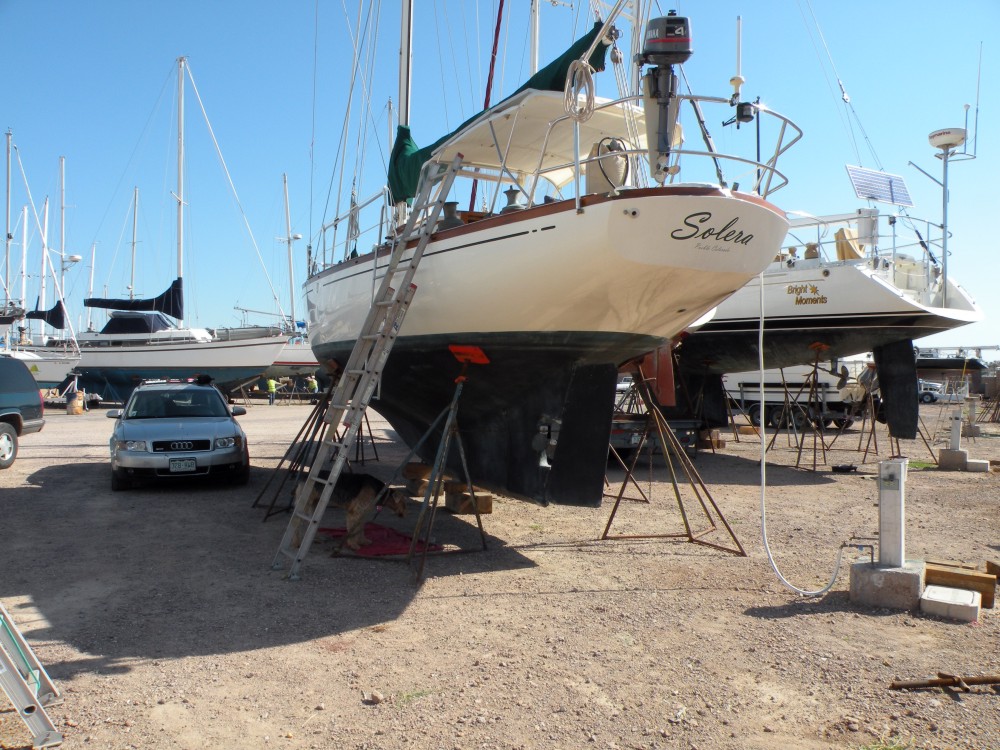
Solera was in the Marina Seca work yard, aka the dirt yard, for over a week for chainplate repairs and a good cleaning. Once again, Louis Hernandez the local machinist, worked his magic. We now have a bombproof rig. The test sail was just about perfect. Dolfins surrounded Solera as she set sail and stayed with us for several minutes. It felt like they were welcoming us back. The sailing was mellow almost the whole afternoon. There was a brief period at the end when the wind reached fifteen kts apparent. We scooted along at 6.8 kts with the rail down and all crew smiling.


Next, we're provisioning for a trip over to Baja. The plan is to cross the sea to San Marcos Island, then work our way South to Pureto Escondido for Loretofest. This is a big annual cruisers get together I’ve been wanting to check out. There’s music, food, a regatta and other stuff going on all to benefit the local schools. After that it’s on to La Paz, winds permitting.

Monday, November 22, 2010

Back in San Carlos

Hola,

We’re back in San Carlos doing some sailing, working on boats and enjoying Mexico. We arrived a few weeks ago and quickly moved Solera into the work yard. It took six days to get her ready to launch due to a few routine maintenance tasks and a two day break to crew for Oscar in the 40th annual Tucson Sailing Club Fall Regatta.
We sailed Bombay, his Pearson 34 to a second place finish in Spinnaker Class. Sounds impressive but there were only two boats racing with spinnakers! However, we were the fourth boat across the line both days and very close behind the other boat in our class… this was Oscar’s best result so far. The course was unusual and interesting this year. We raced from just off Posada beach in San Carlos to a finish near the waterfront in downtown Guaymas. The route took us across San Francisco bay and around two capes, Cabo Arco and Cabo Haro, then to a tricky beat up into Guaymas Harbor. One of our tacks had us sailing 50 feet off the stern of a docked Mexican Navy warship. We were glad we got smiles and waves from the crew instead of drawn weapons. The total course distance was about 14 miles each day. The winds were so strong on Sunday that only about 10 of the original 17 boats raced back. Oscar has always said that Bombay would do well if she got some stronger wind and it proved to be true. Saturday’s wind peaked in the low 20’s and Sundays in the upper 20’s.
The following weekend Cyn and I decided to check out the Dia de los Muretos celebration in Guaymas. In our over 35 years of traveling in Mexico, we’ve never been to a Day of the Dead Celebration. It was a really interesting cultural experience. Several blocks of the city center were closed to traffic and decorated with giant skeleton sculptures and other works by local artists. Nearly everyone was paying respects to dead relatives in one way or another. Most were wearing face paint or masks and dressed as a favorite deceased family member. Many set up elaborate displays with pictures and artifacts related to their family’s history. Children read aloud long narratives that traced back their ancestry. There was food, concerts, plays, and crafts but the whole event was subdued and respectful, very different from the other boisterous Mexican celebrations.
Tom and Sara came down and spent a week sailing and hanging out in San Carlos. We found them a casita pretty close to the marina for $175 per week. It was a really nice place with a swimming pool right out the door. Solera had a few issues during their visit though. First the alternator died. Not a big problem since I had a spare. So, after a little work we were able to go out for a perfect afternoon sail on the bay. Then, on an overnight trip up to San Pedro Bay we had transmission problems that left us engineless. I won’t go into detail but we sailed back the next day to within a hundred yards of our mooring before dropping anchor. We stayed off the rocks at the narrow entrance to the bay largely from short tacking and wind reading skills learned at Pueblo Reservoir. Sara said she was impressed.
Cyn and I went for a sail a couple of days later to test the repaired transmission ( fixed it myself for $30). It seems to be ok. We‘ll see how it does over the next week or two. We don’t have any plans for long distance cruising this trip, just a few overnighters up the coast.

Oscar recently tweaked his shoulder pulling a forestay up to the masthead on a rigging project. He literally could use a right-hand-man for a few days so I volunteered. So far we have done two furler installations, a rig inspection, two rig tunes, and an antenna installation. I’m the one who goes aloft, often over 60 feet on the bigger boats. It’s enjoyable and interesting work. Plus, it’s a good way to supplement the retirement income.


Till next time,

Ric & Cyn

Monday, June 28, 2010

Solera's Baja Route Map

Here's a map showing the route of Solera during our most recent cruise.


Trip Stats:
495 nautical miles logged
88 miles - longest nonstop passage
7.6 kts - fastest boat speed
26 kts - highest wind speed
6496 feet - greatest water depth
14 anchorages
3 - total number of tacks
(all on 2nd to last day while leaving Concepcion)

Sunday, June 13, 2010

Isla Coronados to San Carlos


The twenty mile passage from Isla Coronados to Caleta San Juanico was a special one with the spinnaker up the whole way! The wind was light, around eight knots, and from the right direction. Seas were flat so Solera made good progress at around five knots. Always looking for more speed I remembered seeing an old picture of a Columbia 40 flying it’s spinnaker. It had what’s called a spinnaker staysail up. So, I decided to raise our staysail and see what happened. At the wind angle we had it set well and did not affect the spinnaker much at all. Adding the staysail bumped up our speed by half a knot.

As we approached San Juanico it was time to douse the spinnaker. (This is probably boring to most of you but I just love this stuff.) Our setup has a sock that gets pulled down and in the process gathers the giant fifty foot tall sail into a long fabric tube. After that you lower the tube to the deck with the halyard. That all sounds great but it’s important to get the snuffing done quickly. Lines tangle, sails tear, or end up in the water when things go wrong. So, Cyn and I tried something different this time to make things more efficient. We put the boat on autopilot and both of us went to the foredeck. She went to the bow and I stayed by the mast with the line for the sock. When we were both ready, Cyn pulled the lanyard on the snap-shackle at the bow. The sail released with a pop and went flying away from the boat. At the same instant I began drawing the sock down snuffing the sail. I bet it took less than ten seconds to get the huge spinnaker doused!


At San Juanico we were lucky and got the best spot in the bay to anchor. There is only room for one sailboat between the detached ridge of rock spires and another block shaped island at the north end of the bay. We moved in right after a trawler left. San Juanico gets a fair amount of swell so anchoring between the rocks offers great protection. Plus, it’s really cool being tucked in between the beautiful formations.


Our cruisers guide said there are black obsidian apache tears “dotting the seven mile dirt road that connects San Juanico to Highway 1“. Cindy and I went out on a mission to find them. We took a five mile morning hike and found nothing but heat and a broken down water truck. Not a single apache tear anywhere. I was ready to give up but we knew these rocks were around somewhere. At the cruiser’s shrine the trawler Pacific left his boat name spelled out in apache tears. Turned out, a short hike that evening over the hill behind the shrine led us to a different section of the dirt road. It really was dotted with the black glass stones. Cyn and I both picked up a handful.


Our next passage was a long one, fifty three miles up to Playa Santispac in Bahia Concepcion. We left in a stiff breeze with the first reef in. Solera shot across the eight mile Bahia San Basilio in just over an hour. Then the fun was over. The wind shifted behind us and dropped to about five knots. We had to motor sail the rest of the way to make it to our planned anchorage before dark. I guess we’re cruisers and not sailing purists. I can understand why some sailors keep their engines off as much as possible or, don’t have one at all. It would be very satisfying to complete a passage anchor up to anchor down under sail only. But, a flexible schedule and a willingness to wait for wind would be a must.


At Santispac we were greeted by another whale shark as we set the anchor. This one circled around but never came closer than about twenty yards. Looked like it might be a little bigger the one at Escondido. This time in Concepcion we wanted to check out some new anchorages. We sailed down to Isla Requeson and found a nice beach and at nearby Playa Buenaventura a great restaurant bar. We also anchored at Playa Coyote for a night. The water temp has warmed considerably since our last stay in the bay. With the south trending winds, the air temp and humidity were also up. All signs that it’s time to head back to San Carlos.


Our plan was to leave Concepcion and anchor at Punta Chivato about twenty miles up the coast. The idea being to shave a few miles off the upcoming sail back across the sea. This ended up being a poor decision. I knew the Chivato anchorage offered marginal protection and sure enough when we arrived the conditions were too rough. Plan B took us to the other side of the point to an alternate anchorage. Once again, too rough. This left us with a choice of backtracking twenty two miles or continuing twenty two miles to an anchorage on the north side of Isla San Marcos. We chose San Marcos hoping for the best and arrived at dusk to a beautiful protected little cove. The bad part was we sailed about forty five miles and only took five miles off the crossing distance.


Then came our next bad choice. The SSB weather called for ten to fifteen “all night long” for the seventy three mile crossing that evening. Those would be pretty good conditions. We decided to go for it leaving at 1600 that afternoon. Things ended up being quite different. Rounding the north end of San Marcos put us in high winds and rough seas that stayed with us pretty much all the way across. These were the roughest conditions I’ve experienced on a sailboat. Occasional waves into the cockpit, water running down the side decks, and lots of motion. Cyn said it was like an amusement park ride (she hates amusement park rides). Just as things really got interesting I thought “I should put on my foul weather jacket”. Not more than a minute later a large wave climbed up the side of the hull and broke into the cockpit. I got doused and immediately went for the foulies. Cyn and I were glad to be on a boat the size of Solera in those conditions. We sailed under a double reefed main and staysail but still had a fast crossing at thirteen hours.

Dolphins visited a half dozen times that moonless night. I never saw one though. All I could see were the phosphorescent trails they were leaving. It was unreal watching the large tubes of underwater sparks quickly converging on the boat in formation. The trails were often thirty feet long. It looked like a volley of fast torpedoes headed for Solera.

We arrived in San Carlos at first light. Entering the calm bay, we dropped sail then motored past our mooring and tied up at the empty fuel dock. What a nice feeling it was to finally relax after the challenging all night passage. I got a funny look from Cindy when I grabbed a beer at five in the morning. Sure tasted great. We never had any alcohol while sailing, only when safely at anchor or in a marina. Conditions quickly change out there and good judgment is a must.

This whole Baja cruise has been an incredible adventure. We logged just under five hundred miles and stayed in fourteen different anchorages. Each one had it’s own unique character. The sailing conditions were fantastic until the very last day. Solera was a comfortable floating home with all the necessities and a few luxuries. She proved to be a safe and sturdy boat with great sailing characteristics. Everyone we met, both Gringos and Mexicans, were pleasant and friendly. Most of the cruisers we talked to go out for several months at a time and a few were out there full time. For now Cyn and I will come down in the Spring and in the Fall spending a couple of months on each trip. There are many more areas in the Sea of Cortez we plan to explore. We’ll be back again in October 2010!
Friday, June 4, 2010

The Loreto Area


Shark! For three consecutive mornings we had a Whale Shark circling Solera at Puerto Escondido. These are big sharks with a claim to fame as the largest species of fish. This juvenile was close to twenty feet long. Adults reach sixty feet and can live over one hundred fifty years. They feed on plankton as they slowly cruise around filtering the water. The spotted markings are unmistakable as is the huge mail slot mouth. I took some pretty good pictures but they really don’t do justice to the size and beauty of this fish.


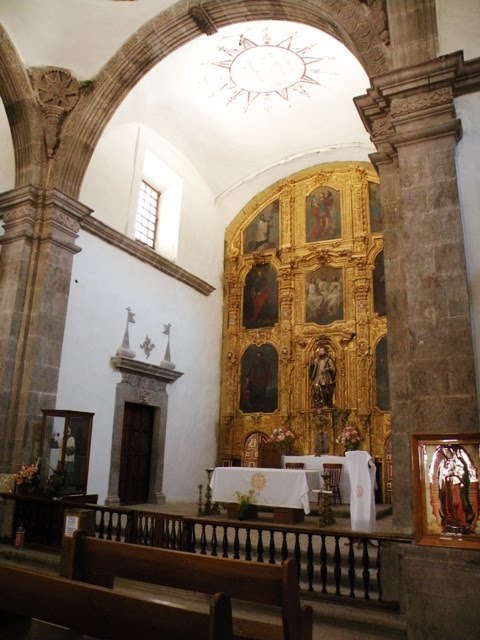
We decided to rent a car to check out the nearby town of Loreto and also drive up into the mountains to an old mission called San Javier. Turned out to be a great idea. The car was delivered to the marina and cost only a little more than a round trip taxi ride to town. Loreto is a really nice place with good restaurants, shops, and stores for provisioning. The malecon (waterfront) is adjacent to an old mission church and a shopping district in the town center. I would guess the population to be around ten thousand. Apparently there were plans to develop some resorts in the area but that has come to a screeching halt. All for the better in my opinion.

One thing I didn’t mention. After nearly a month on a sailboat and never going over seven kts, getting in a car and going sixty miles an hour is a really weird feeling. Everything is flying by so fast. I felt like, man, I’ve got to slow down! I showed Cyn the speedometer as we were driving to Loreto. It read 100... kph. She said “Feels like 100 mph to me”.


The 35 km trip up to San Javier was a pleasant surprise. We had no expectations and really didn’t know what we would see. The drive into the desert wilderness was amazing. The first fifteen km were on a new paved road up an improbable desert canyon dotted with palm filled oases. To the north is a symmetrical mountain peak at least fifteen hundred feet tall with rows of vertical rock buttresses on it‘s south face. Cyn got kind of annoyed because I was always stopping, taking pictures, looking through binoculars, and going on and on about this or that possible route up it. What can I say, once a climber always a climber.


We reached a pass at about 20 km, left the canyon and started down a long gradual slope that crossed a most brutal desert. It seemed other worldly with strange vegetation and unusual rock formations. Cyn and I could not believe anyone would build anything out here. Then, in the middle of nowhere there’s water. A small trickle of water grows to a stream then to a tiny river with a dam and small lake. Just past this is lush, green San Javier. The Mission is incredibly elaborate considering it’s location. In the mid seventeen hundreds when it was established this place may as well have been on the moon.


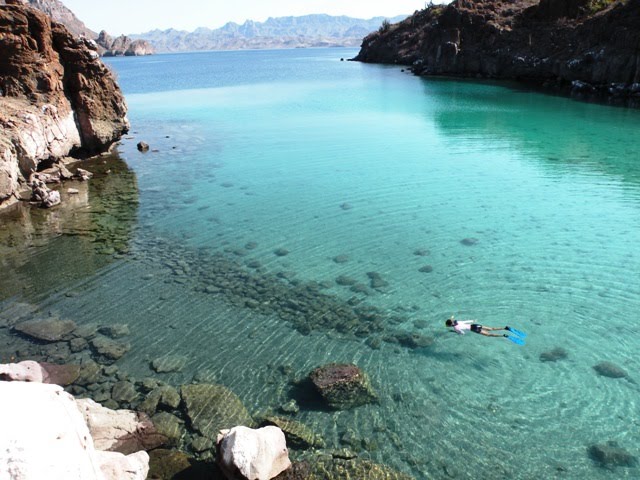
Back on Solera, we left Escondido and made a short trip across the channel to Isla Danzante (Dancer Island) and Honeymoon Cove. Each anchorage we go to seems to get better. This one was really cool. There is a very tight north anchorage that we started to swing through but decided “Too small for a forty footer, perfect for a 25 or 27 though“. It’s shaped like a rectangular swimming pool about 150 feet wide and 400 feet long complete with a shallow end and a deep end. The sides are 25 foot tall volcanic rock cliffs. We opted for the larger but still tight center anchorage. The water here is the clearest I’ve ever seen. I could plainly see my anchor on the bottom at 30 feet. Visibility was over fifty feet. Once anchored and settled in we took the dinghy over to the “pool” and did some snorkeling. Great hiking trails also. The pictures tell the story pretty well.


The next stop was Puerto Ballandra on Isla Carmen. This is a good anchorage should you need to duck out of bad weather. Great protection from everything but a blow from the west, which is rare. The trip up from Danzante was a fifteen mile motorboat ride in flat calm conditions. At least the batteries are fully charged.


Next, we went ten miles back across the channel to Isla Coronados. This was a perfect sail in every way. Ten knots of wind, all the canvas up, flat seas, wind on the beam, and just over six knots of boat speed. As we approached the island we sailed through a huge group of Pacific White Sided Dolphin. I can’t even guess how many there were. The shoal stretched out about a half mile. Several of them went out of their way to put on a show, splashing and jumping near our transom.

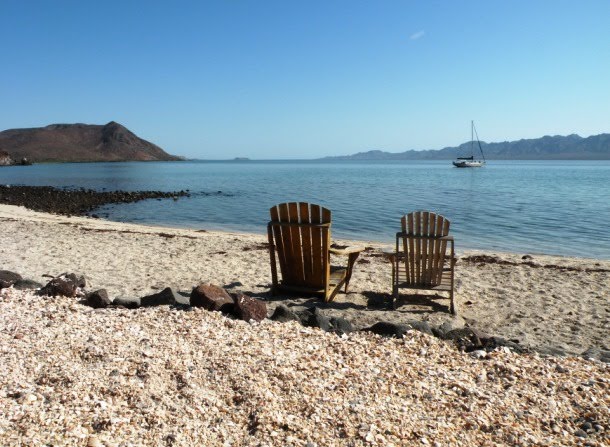
Isla Coronados is a volcanic cone island that reminded us of the leeward side of an island in Hawaii. Black and brown pumice rock and beautiful coarse white sand. This place gets my vote for the best beaches we’ve seen yet. Solera anchored two hundred yards out in twelve feet over a sand bottom. The shallow depth really brings out the turquoise color in the water here. There’s a trail to the top of the 928 foot volcano that I’m sure would provide spectacular view of the whole region. The problem is when you get away from the water the temperature really climbs. On the boat and at the beach it has consistently been in the mid 80’s at the hottest. Go inland even just a quarter mile and it’s in the mid 90’s. We’ll do more hiking this Fall when it will be cooler. Almost every anchorage has adjacent trails with interesting destinations.

Leaving Coronados, we’ll be making a series of passages that will set us up for the northern crossing back to San Carlos. More on that next time.

Sunday, May 23, 2010

Agua Verde & Los Gatos


I’m going to write about today May 22,2010 and work backward for a change. Mostly because we were tested with our first strong winds of the trip. We left Agua Verde at 0845 planning to have light and variable winds for the twenty two mile passage to Puerto Escondido. We usually get morning forecasts on single side band radio from Gary broadcasting from Conception Bay. Today we listened to a different net with Don Anderson doing weather out of Southern California. His forecast was for gale force winds on the Pacific side of Baja but “calm, calm ,calm” in the Sea of Cortez. Well, the wind steadily built up as we sailed North along a coastline flanked by the impressive Sierra de la Giganta mountain range. As we sailed past a high mountain pass the wind went from a comfortable twelve knots to a less comfortable twenty five knots. My usual uneasiness with weather like this comes from wondering how strong the wind will get. I reefed the main down and furled the genoa two times as the wind increased. After putting in the second reef I told Cyn that I could easily handle the reefing even in much stronger wind. I had a harness on while out on deck and was clipped to the mast while reefing the main. Solera is well set up for reducing sail.


The fun part was ripping along at over seven knots on a beam reach with such beautiful desert scenery going by. With the wind out of the west there was no lee shore to worry about. As a matter of fact if we wanted less wind, we could work our way toward shore and get in the wind shadow of the cliffs. After a couple of hours of this I noticed what looked like flat calm seas on the horizon. At the time, I couldn’t imagine it going from the mid 20’s to 0 that quickly but that’s exactly what happened. We sailed into the calm and fired up the diesel.


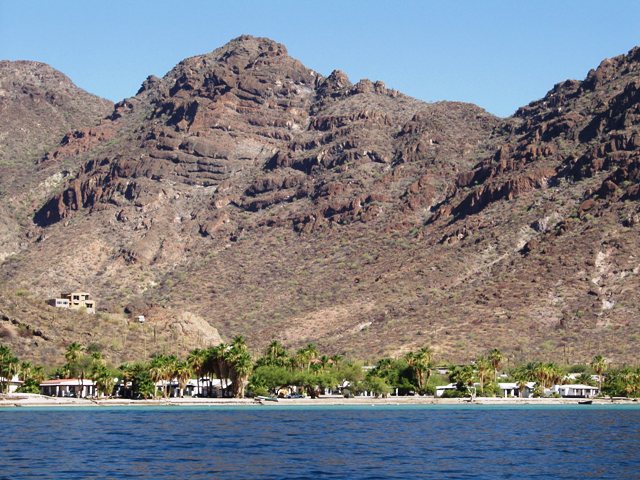
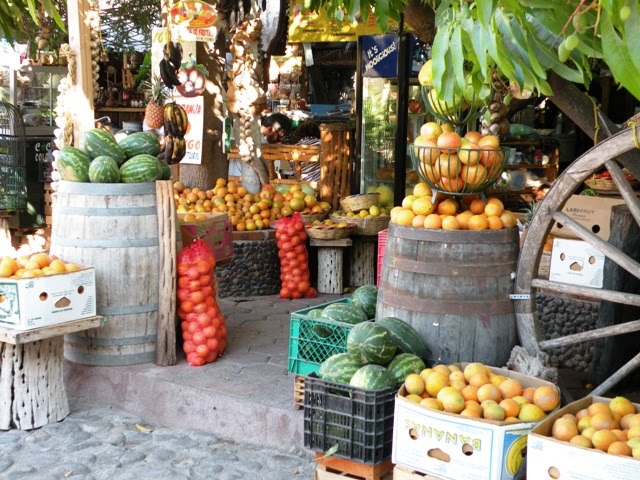
Agua Verde, the anchorage we had just left, is a beautiful bay with a small village adjacent to it. The area is remote with the only land access being a 25 mile dirt road to highway 1. There are twenty or so dwellings, two tiendas, a restaurant, a very small church, a one room school, and a ranch that sells fresh goat cheese. Walking around there is like going back in time a hundred years or so. You get the feeling that the population of less than one hundred is just barely able to keep the community going. Even so, the people were friendly and helpful. For instance, during my last trip in I motored up to the beach in the dinghy and was immediately greeted by two young boys. They grabbed the painter and helped me get the boat out of the surf. I arranged for them to watch the dinghy while I went out in search of the ranch selling goat cheese and a tienda with produce. Later, as I was returning from up the beach I could see in the distance a group of boys making a bee line for the dinghy. When they got to the inflatable they started bouncing on it and banging on it with sticks. Just as things were starting to get pretty rambunctious, the two boys I had “hired” ran over and put an end to it. When I walked up I could tell they were pretty proud of the work they had done. The smiles on their faces were unforgettable as I paid them off with some fresh apples I had just bought.


As we approached Agua Verde the day before, the reflection of the turquoise water made it look like all the boats anchored in the bay had their hulls painted pastel green. There are a few rocky islets doting the bay with the impressive, Roca Solitaria, standing watch at the entrance. It’s a unmistakable landmark with it’s huge rock tower. Our cruising guide has a picture of this anchorage on it’s cover. There’s a long beach in the center of the bay and two smaller beaches on either side of it. We had puffer fish around the boat, eagle rays cruising by, and while snorkeling Cyn and I saw a four foot Reef Cornetfish. Interestingly, it was long but only about four inches in diameter. The fish has the ability to change it’s color and pattern as it hunts for small prey.


Before Agua Verde we anchored eighteen miles down the coast at Puerto Los Gatos. This was as far south as we made it. The forecast was for southerlies, and since we go where the wind takes us, it was time go North. First thing that happened as we were anchoring at Los Gatos was that Cindy got a bee up her skirt. Not figuratively but literally! Soon there were swarms of bees around the boat seeking fresh water. We put the screens up and managed ok. Cyn was stung twice and I got one in the foot. The evening was pleasant, no bees, but the swell built up overnight rocking us around a bit. Beautiful banded sandstone rock formations surround Los Gatos. It looks a lot like the Utah desert. The only access is from the water so there are no buildings, there’s not even a fishermans camp. With the bees and the lack of protection from the weather I can see why.


Earlier as we were sailing south I was able to give Solera a true test of her pointing ability. If you are not into sailing you may want to skip this part. While on the way to Agua Verde the first time the wind shifted to the south east. That forced us off course a bit and had us sailing into the wind as much as possible. Here are the numbers Solera was able to generate. Under full sail we were pointing 30 to 35 degrees with 12 kts of apparent wind. We had just under a knot of adverse current and were beating into two foot chop. All this going against her and Solera was ticking away at four and one half knots. Needless to say I was impressed. On another note, I think you might find this interesting. We have now sailed 241 nautical miles and have yet to make our first tack! So much for being concerned about tacking a cutter rig.

We’re now in beautiful Puerto Escondido where we’ll re-provision, use the internet and have dinner out. Plans are to head North in a couple of days and seek out some more interesting anchorages.